
Walkways & Entry Hardscapes in Shelton, CT
Get a hardscape build that feels permanent, drains correctly, and looks right with the home. We’ll walk you through layout, materials, and real pricing factors—then build it clean and tight.
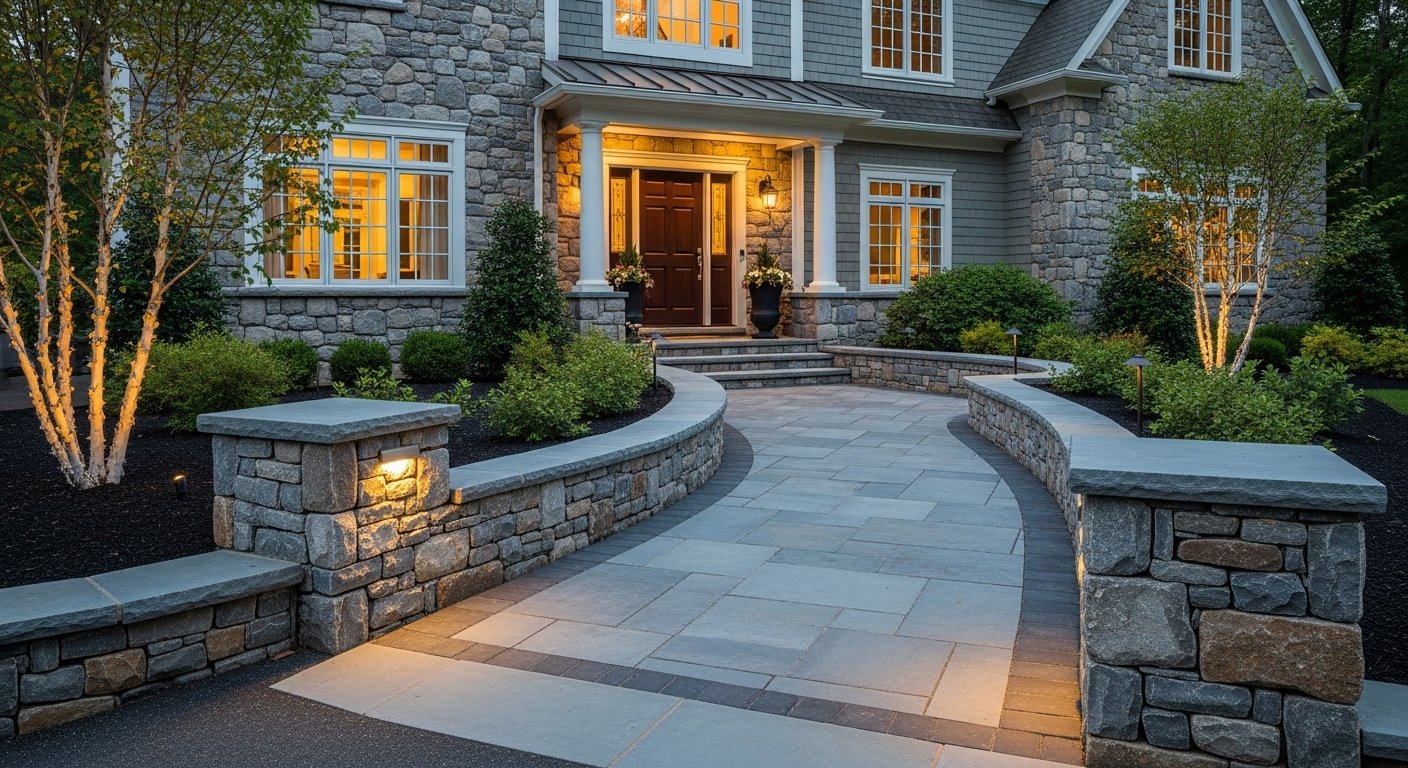
Signs this project is on your radar
If a few of these sound familiar, you’re in the right place. We’ll confirm the cause and recommend the cleanest fix—without guessing.
- Front steps or walkways are uneven and feel unsafe
- Concrete is cracked and trip hazards are getting worse
- Your entry looks plain and doesn’t match the home’s style
- Water flows across the path and freezes in winter
- You need a wider walkway for strollers or guests
- Landscape beds spill mulch onto the path after rain
- You want lighting or edging integrated cleanly
What to expect from a walkways & entry hardscapes project
Entry hardscapes are the first impression of the home—and they’re safety-critical. If the path is uneven or narrow, it’s something you feel every day. A well-designed walkway is about alignment, transitions, and a base that stays stable through the seasons.
Design + build with the site in mind
We plan around grade, runoff, access, and how you want to use the space. Then we build with tight base work, clean edges, and durable materials.
- On-site evaluation and layout guidance
- Material selection support (color, format, finish)
- Drainage and pitch planning
- Clean excavation, compaction, and finish work
A straightforward sequence
- Scope call/text: We confirm goals, size, and must-haves.
- Site check: Grades, soil, drainage paths, access, and utilities.
- Plan + quote: Clear assumptions, options, and next steps.
- Build: Excavation → base → install → finish details.
- Walkthrough: Final review and care guidance.
Pricing factors that move your budget
Hardscape pricing isn’t just square footage. These are the items that typically change the number.
- Excavation depth + base work: Poor soil, old concrete removal, or deeper builds add labor.
- Access: Tight gates, long carry distances, and protected landscaping affect production.
- Drainage: Added drains, tie-ins, or regrading can be essential (and worth it).
- Material selection: Premium stone, caps, and large-format units change installed cost.
- Grade changes: Steps, landings, and terracing add complexity.
- Edges + borders: Soldier courses, contrasting borders, and curves take more time.
- Integrations: Lighting, gas sleeves, or future kitchen planning saves headaches later.
- Finish level: Clean transitions, detail cuts, and alignment take craftsmanship.
Want a fast ballpark range?
Call or text with rough dimensions (or a photo), and we’ll tell you what typically drives cost on homes like yours in the Shelton area.
Service area coverage
Built in Shelton, and regularly working in nearby towns for high-ticket outdoor living projects.
Bundle work for a cleaner result
Many projects are most efficient when planned together—especially when drainage or grading is involved.
Decision support
Common questions
Clear answers—no runaround.
How long does a walkway project take?
Most walkway installs take 1–3 days depending on length, steps, and edge details.
What’s the cost range for a paver walkway?
Many walkways run $4,000–$18,000 based on size, excavation needs, and stone selection.
Can you replace concrete steps too?
Yes. Entry upgrades often include steps, landings, and transitions so everything feels cohesive.
Do pavers get slippery?
Surface texture matters. We can recommend pavers that stay more grippy in wet conditions.
Can you add lighting?
Yes. Low-voltage lighting integrates well with walls, steps, and posts, and improves safety.
Will the walkway heave in winter?
Proper base prep and compaction reduce freeze/thaw movement significantly.
How wide should a front walkway be?
Many homeowners prefer 4–5 feet for comfortable two-way traffic, but it depends on the entry and landscaping.
What’s the best time of year to build?
Spring through fall is typical. Scheduling earlier helps if you want it done before a specific event.
Do you match existing patio pavers?
We can often match or coordinate styles so the home looks intentional, not piecemeal.